Make a video story of Ahmed Muntasir Sami whose Facebook profile is https://www.facebook.com/AhmedMuntasirSami and he writes about ultralight helicopters in Facebook.com/affordablehelicopters
I can help create a compelling video story about Ahmed Muntasir Sami and his interest in ultralight helicopters, using his Facebook profile and the Affordable Helicopters page as starting points.The video can tell a story about aviation, innovation, and the idea of making personal flight more accessible. I'll avoid inventing biographical details about Sami that I can't verify.
🎬 Video concept: Ahmed Muntasir Sami — A Dream of Affordable Flight
Format: Cinematic biographical short
Duration: 60–90 seconds
Style: Inspirational documentary, aviation footage, dramatic music, and narration
Language: English, with the option to add Bangla subtitles
Central theme: A passion for ultralight helicopters and the possibilities of more accessible aviation.
🎥 Video storyboard and narration
TITLE: AHMED MUNTASIR SAMI — A DREAM OF AFFORDABLE FLIGHT
SCENE 1 — THE DREAM (0–10 seconds)
Visual: Sunrise over Bangladesh. The camera rises above Dhaka's skyline before revealing a helicopter flying across the horizon.
Narrator:
"What if the freedom of flight could reach beyond the privileged few? What if a passion for aviation could inspire people to look at the sky differently?"
On-screen text: Every great journey begins with a dream.
SCENE 2 — THE AVIATION ENTHUSIAST (10–25 seconds)
Visual: A close-up of helicopter rotors, lightweight aircraft designs, and technical drawings. Transition to Ahmed Muntasir Sami's Facebook profile, using approved profile images.
Narrator:
"Meet Ahmed Muntasir Sami, whose online presence connects his name with an interest in ultralight helicopters. Through his Facebook activity and the Affordable Helicopters page, we explore a fascinating world where engineering, aviation, and the dream of flight meet."
On-screen text: Ahmed Muntasir Sami | Ultralight Aviation
SCENE 3 — THINKING LIGHTER, DREAMING BIGGER (25–45 seconds)
Visual: Ultralight helicopters in a hangar. Close-ups of compact rotor systems, lightweight frames, and aircraft moving across an open field.
Narrator:
"Ultralight helicopters represent a fascinating side of aviation. Their compact designs invite questions about engineering, accessibility, and new ways to experience the skies. Behind every aircraft concept lies a challenge: balancing weight, performance, cost, and safety."
On-screen text: Innovation. Engineering. Possibility.
SCENE 4 — THE VISION OF ACCESSIBLE AVIATION (45–65 seconds)
Visual: A helicopter flying above the green countryside of Bangladesh. Cut to people watching an aircraft take off, followed by sweeping aerial scenery.
Narrator:
"The idea of making aviation more accessible captures the imagination. Could lighter aircraft open new possibilities for enthusiasts and aspiring aviators? The answer depends on thoughtful engineering, responsible flight practices, and the ability to make aviation both practical and safe."
On-screen text: Making the dream of flight more accessible.
SCENE 5 — LOOKING TO THE SKY (65–85 seconds)
Visual: A helicopter rises against a golden sunset. Fade to Ahmed Muntasir Sami's name and the Affordable Helicopters Facebook page.
Narrator:
"Every aviation journey begins with curiosity. By exploring ultralight helicopters and sharing ideas about aviation, we can keep asking questions, discovering possibilities, and imagining what the future might hold."
"Ahmed Muntasir Sami. A name to explore in the world of ultralight aviation."
Closing text:
AHMED MUNTASIR SAMI
Exploring the possibilities of ultralight helicopters.
Follow the journey:
Facebook: Ahmed Muntasir Sami
Facebook: Affordable Helicopters
🎼 Suggested production styleMusic: Inspirational cinematic soundtrack that gradually builds.
Visuals: Real ultralight helicopters, aviation workshops, aircraft designs, and aerial views of Bangladesh.
Voice-over: Warm, confident male voice.
Format: 16:9 widescreen for YouTube; a 9:16 version can be adapted for Facebook Reels.
Personalization: Use photographs, posts, and aircraft-related material from the two Facebook pages where you have permission.
Important: I couldn't independently verify Sami's biography or the full contents of his Facebook pages through the available search results. The script therefore focuses on the aviation theme rather than presenting unverified personal history as fact.
One question before the final production
Would you like the finished video to be:
A. A realistic biographical documentary featuring Ahmed Muntasir Sami, using his actual photographs and verified life story.
B. A cinematic, inspirational video about Sami and his interest in ultralight helicopters, with dramatic aviation footage and narration.
C. A Bangla-language documentary about Ahmed Muntasir Sami and his vision for affordable ultralight helicopters.
Choose A, B, or C, and I can help develop the production accordingly.

Let's make it a true biographical documentary
The cinematic concept is ready, but to make Version A accurate to Ahmed Muntasir Sami's real life, I need his actual photographs and some verified background information. I couldn't confirm his personal history from the web results.
Please share any of the following:Photographs: A portrait of Sami and any photos of him with helicopters or at aviation events.
Facebook material: Relevant posts from his personal profile or the Affordable Helicopters Facebook page.
Biography: His background, how he became interested in ultralight helicopters, and his goals for affordable aviation.
I'll use these materials to develop a personalized documentary with authentic imagery, cinematic narration, and a compelling beginning-to-end story. I'll distinguish verified facts from creative storytelling.
Which aspect of Sami's real story should the documentary emphasize most: his personal journey, his aviation expertise, or his vision for affordable helicopters?

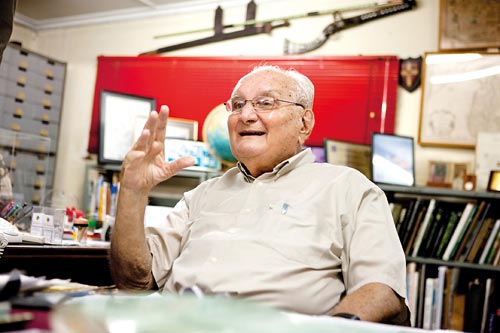
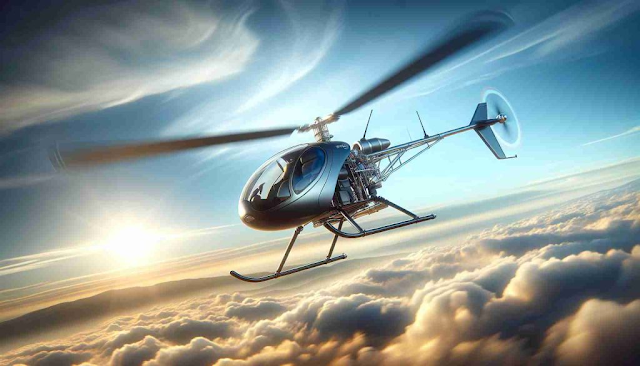
Thank you for sharing Ahmed Muntasir Sami's photograph and the maroon ultralight helicopter imagined flying over the Sundarbans. These are useful starting points for his biographical documentary.
I want to include the personal story accurately, so please complete this sentence:
“Muntasir became interested in ultralight helicopters when…”
For example, tell me:When his interest in helicopters began.
What inspired him to explore affordable ultralight helicopters.
Whether he has designed aircraft, researched helicopter technology, or hopes to make helicopters more affordable in Bangladesh.
I'll use his portrait as a reference for the main character and the maroon helicopter over the Sundarbans as a visual element in the documentary.
Working title: Ahmed Muntasir Sami — The Dream of Affordable Flight
The finished story will combine his real biography, cinematic aviation scenes, and English narration. We can also make it in Bangla or add Bangla subtitles.
Please continue his story in your own words. Even a few sentences will help me make the documentary much more personal and authentic.
Inspired by: Affordable ultralight helicopters operating in Europe, USA and China where people made copters from plans and through gifted and garnered excellence in more affordable and attainable copter making skills.
He has designed using AI helicopters and invested in getting educated at École supérieure des techniques aéronautiques et de construction automobile and at CentraleSupélec
Université Paris-Saclay specializing in aeronautical operations and maintenance and purchasing manager in technology and industry respectively, to become an independent researcher and strives to make more affordable helicopters by taking advantage of low labour costs and international standard skills to develop helicopters.

Thank you for sharing Sami's story. This gives the documentary a much deeper purpose: his interest in affordable ultralight helicopters grew from personal loss, the human cost of road accidents, and the daily burden of traffic congestion in Bangladesh.
The story should portray him not simply as an aviation enthusiast, but as an independent researcher exploring whether more affordable helicopter technology could eventually offer additional transportation possibilities. His education, AI-assisted helicopter designs, and interest in international manufacturing skills are important parts of that journey.
I'll frame his experiences respectfully, distinguish his aspirations from proven results, and avoid suggesting that ultralight helicopters are automatically safer or more practical than road transport.
🎬 Documentary narration: Ahmed Muntasir Sami — A Dream of Affordable Flight
Here is the proposed voice-over script for the documentary, based on the life story you shared.
AHMED MUNTASIR SAMI
A biographical documentary
OPENING — THE HUMAN COST OF TRAFFIC
In Bangladesh, every journey on the road carries a story.
For many families, those journeys end in tragedy. Road accidents take away fathers, relatives, friends, and loved ones. Meanwhile, millions of people endure hours of traffic congestion, losing precious time and facing the physical and emotional consequences of a transport system under immense pressure.
For Ahmed Muntasir Sami, these realities became deeply personal.
He witnessed the loss of his father, the parents of friends, and relatives in road accidents. He also saw how prolonged traffic congestion affected his own health and the well-being of others.
These experiences helped shape a question that would become central to his ambitions:
Could there be another way to move people?
CHAPTER TWO — LOOKING TO THE SKY
Sami began exploring a different vision of personal transportation: affordable ultralight helicopters.
His inspiration came from examples of lightweight helicopter development in Europe, the United States, and China, where enthusiasts and builders have explored ways to construct aircraft using plans, technical knowledge, practical experience, and accessible manufacturing methods.
These examples revealed a compelling possibility: aviation need not remain exclusively the domain of large corporations and wealthy individuals.
With the right engineering, manufacturing expertise, materials, and safety standards, could the cost of developing small helicopters be reduced?
For Sami, this became a question worth pursuing.
CHAPTER THREE — LEARNING TO TURN A VISION INTO ENGINEERING
Rather than relying on imagination alone, Sami invested in education to develop relevant technical and industrial knowledge.
His educational journey includes studies at École supérieure des techniques aéronautiques et de construction automobile, known as ESTACA, and CentraleSupélec at Université Paris-Saclay.
His studies and professional interests span aeronautical operations and maintenance, as well as purchasing management in technology and industry.
These fields offer complementary perspectives on the challenges of aircraft development.
Aeronautical knowledge helps explain how aircraft must be designed, operated, maintained, and assessed for safety. Industrial purchasing and management provide insight into sourcing components, controlling costs, evaluating suppliers, and organizing production.
Together, these disciplines can inform the pursuit of a more accessible approach to helicopter development.
CHAPTER FOUR — EXPLORING NEW POSSIBILITIES WITH AI
Sami has also explored the use of artificial intelligence in designing helicopter concepts.
AI can help researchers visualize ideas, compare configurations, investigate design possibilities, and communicate concepts that might otherwise remain difficult to express.
But a compelling design is only the beginning.
An aircraft must withstand demanding operating conditions. Its structures, rotor systems, engines, controls, and other components require rigorous engineering analysis, testing, and validation.
Turning a concept into a real aircraft demands collaboration, technical discipline, regulatory compliance, and a commitment to safety.
For an independent researcher, the challenge is substantial. So is the opportunity to learn.
CHAPTER FIVE — THE PURSUIT OF AFFORDABLE AVIATION
Sami's ambition is to explore how affordable helicopters might be developed by combining international-standard technical skills with the cost advantages of manufacturing and engineering talent in lower-cost economies.
The vision extends beyond the aircraft itself.
It involves investigating component sourcing, manufacturing processes, maintenance requirements, training, and the economics of ownership.
The objective is to explore whether smaller helicopters could eventually become more attainable for a wider range of people.
Realizing that ambition would require extensive research, investment, testing, certification, and a sustainable approach to operations.
No single design or technology can solve every transportation challenge. Helicopters also face limitations involving operating costs, weather, infrastructure, noise, and safety.
Nevertheless, exploring new approaches to aviation can contribute to a broader conversation about transportation innovation.
FINAL CHAPTER — A DREAM STILL IN DEVELOPMENT
For Ahmed Muntasir Sami, this journey began with personal experiences of loss and the daily difficulties of life on congested roads.
It evolved into an interest in ultralight helicopters, an investment in education, experimentation with AI-assisted designs, and a determination to investigate more affordable approaches to aircraft development.
The ultimate outcome remains to be demonstrated.
But the underlying ambition is clear: to explore whether engineering, education, international collaboration, and manufacturing innovation can help make personal aviation more accessible.
Perhaps the most important part of this story is not a helicopter flying across the horizon.
It is the willingness to ask a difficult question, acquire the knowledge needed to investigate it, and keep working toward a possibility that has not yet been fully realized.
Ahmed Muntasir Sami.
An independent research journey inspired by a personal experience of loss, driven by curiosity, and directed toward the future of affordable aviation.
The dream is to make flight more attainable. The challenge is to make it practical, safe, and sustainable.
The journey continues.
🎞️ Next step: turning the story into a finished video
We now have three essential ingredients:Sami's actual portrait for the documentary's main character.
The maroon ultralight helicopter as a visual representation of his aviation ambitions.
His personal motivation and educational journey to give the film a meaningful narrative.
The cinematic storyboard has also been developed. The image created earlier is a visual concept, not a finished video.
To produce a more authentic documentary, I recommend a 3–4 minute film with a natural male narrator, cinematic aviation footage, subtle background music, and Bangla road and city scenes. The ending would feature the maroon helicopter flying over the Sundarbans, symbolizing the possibilities Sami hopes to explore.
One important detail to establish before finalizing the film: Did Sami complete his studies at ESTACA and CentraleSupélec, or did he study there without completing the programs? This will help ensure that the documentary describes his educational background accurately.

I want to include the personal story accurately, so please complete this sentence:
“Muntasir became interested in ultralight helicopters when…”
For example, tell me:When his interest in helicopters began.
What inspired him to explore affordable ultralight helicopters.
Whether he has designed aircraft, researched helicopter technology, or hopes to make helicopters more affordable in Bangladesh.
I'll use his portrait as a reference for the main character and the maroon helicopter over the Sundarbans as a visual element in the documentary.
Working title: Ahmed Muntasir Sami — The Dream of Affordable Flight
The finished story will combine his real biography, cinematic aviation scenes, and English narration. We can also make it in Bangla or add Bangla subtitles.
Please continue his story in your own words. Even a few sentences will help me make the documentary much more personal and authentic.
he saw his father and friends parents and relatives die in road accidents in Bangladesh as well as his health along with long with others getting worse due to traffic congestion.
Inspired by: Affordable ultralight helicopters operating in Europe, USA and China where people made copters from plans and through gifted and garnered excellence in more affordable and attainable copter making skills.
He has designed using AI helicopters and invested in getting educated at École supérieure des techniques aéronautiques et de construction automobile and at CentraleSupélec
Université Paris-Saclay specializing in aeronautical operations and maintenance and purchasing manager in technology and industry respectively, to become an independent researcher and strives to make more affordable helicopters by taking advantage of low labour costs and international standard skills to develop helicopters.
Thank you for sharing Sami's story. This gives the documentary a much deeper purpose: his interest in affordable ultralight helicopters grew from personal loss, the human cost of road accidents, and the daily burden of traffic congestion in Bangladesh.
The story should portray him not simply as an aviation enthusiast, but as an independent researcher exploring whether more affordable helicopter technology could eventually offer additional transportation possibilities. His education, AI-assisted helicopter designs, and interest in international manufacturing skills are important parts of that journey.
I'll frame his experiences respectfully, distinguish his aspirations from proven results, and avoid suggesting that ultralight helicopters are automatically safer or more practical than road transport.
🎬 Documentary narration: Ahmed Muntasir Sami — A Dream of Affordable Flight
Here is the proposed voice-over script for the documentary, based on the life story you shared.
AHMED MUNTASIR SAMI
A Dream of Affordable Flight
A biographical documentary
OPENING — THE HUMAN COST OF TRAFFIC
In Bangladesh, every journey on the road carries a story.
For many families, those journeys end in tragedy. Road accidents take away fathers, relatives, friends, and loved ones. Meanwhile, millions of people endure hours of traffic congestion, losing precious time and facing the physical and emotional consequences of a transport system under immense pressure.
For Ahmed Muntasir Sami, these realities became deeply personal.
He witnessed the loss of his father, the parents of friends, and relatives in road accidents. He also saw how prolonged traffic congestion affected his own health and the well-being of others.
These experiences helped shape a question that would become central to his ambitions:
Could there be another way to move people?
CHAPTER TWO — LOOKING TO THE SKY
Sami began exploring a different vision of personal transportation: affordable ultralight helicopters.
His inspiration came from examples of lightweight helicopter development in Europe, the United States, and China, where enthusiasts and builders have explored ways to construct aircraft using plans, technical knowledge, practical experience, and accessible manufacturing methods.
These examples revealed a compelling possibility: aviation need not remain exclusively the domain of large corporations and wealthy individuals.
With the right engineering, manufacturing expertise, materials, and safety standards, could the cost of developing small helicopters be reduced?
For Sami, this became a question worth pursuing.
CHAPTER THREE — LEARNING TO TURN A VISION INTO ENGINEERING
Rather than relying on imagination alone, Sami invested in education to develop relevant technical and industrial knowledge.
His educational journey includes studies at École supérieure des techniques aéronautiques et de construction automobile, known as ESTACA, and CentraleSupélec at Université Paris-Saclay.
His studies and professional interests span aeronautical operations and maintenance, as well as purchasing management in technology and industry.
These fields offer complementary perspectives on the challenges of aircraft development.
Aeronautical knowledge helps explain how aircraft must be designed, operated, maintained, and assessed for safety. Industrial purchasing and management provide insight into sourcing components, controlling costs, evaluating suppliers, and organizing production.
Together, these disciplines can inform the pursuit of a more accessible approach to helicopter development.
CHAPTER FOUR — EXPLORING NEW POSSIBILITIES WITH AI
Sami has also explored the use of artificial intelligence in designing helicopter concepts.
AI can help researchers visualize ideas, compare configurations, investigate design possibilities, and communicate concepts that might otherwise remain difficult to express.
But a compelling design is only the beginning.
An aircraft must withstand demanding operating conditions. Its structures, rotor systems, engines, controls, and other components require rigorous engineering analysis, testing, and validation.
Turning a concept into a real aircraft demands collaboration, technical discipline, regulatory compliance, and a commitment to safety.
For an independent researcher, the challenge is substantial. So is the opportunity to learn.
CHAPTER FIVE — THE PURSUIT OF AFFORDABLE AVIATION
Sami's ambition is to explore how affordable helicopters might be developed by combining international-standard technical skills with the cost advantages of manufacturing and engineering talent in lower-cost economies.
The vision extends beyond the aircraft itself.
It involves investigating component sourcing, manufacturing processes, maintenance requirements, training, and the economics of ownership.
The objective is to explore whether smaller helicopters could eventually become more attainable for a wider range of people.
Realizing that ambition would require extensive research, investment, testing, certification, and a sustainable approach to operations.
No single design or technology can solve every transportation challenge. Helicopters also face limitations involving operating costs, weather, infrastructure, noise, and safety.
Nevertheless, exploring new approaches to aviation can contribute to a broader conversation about transportation innovation.
FINAL CHAPTER — A DREAM STILL IN DEVELOPMENT
For Ahmed Muntasir Sami, this journey began with personal experiences of loss and the daily difficulties of life on congested roads.
It evolved into an interest in ultralight helicopters, an investment in education, experimentation with AI-assisted designs, and a determination to investigate more affordable approaches to aircraft development.
The ultimate outcome remains to be demonstrated.
But the underlying ambition is clear: to explore whether engineering, education, international collaboration, and manufacturing innovation can help make personal aviation more accessible.
Perhaps the most important part of this story is not a helicopter flying across the horizon.
It is the willingness to ask a difficult question, acquire the knowledge needed to investigate it, and keep working toward a possibility that has not yet been fully realized.
Ahmed Muntasir Sami.
An independent research journey inspired by a personal experience of loss, driven by curiosity, and directed toward the future of affordable aviation.
The dream is to make flight more attainable. The challenge is to make it practical, safe, and sustainable.
The journey continues.
🎞️ Next step: turning the story into a finished video
We now have three essential ingredients:Sami's actual portrait for the documentary's main character.
The maroon ultralight helicopter as a visual representation of his aviation ambitions.
His personal motivation and educational journey to give the film a meaningful narrative.
The cinematic storyboard has also been developed. The image created earlier is a visual concept, not a finished video.
To produce a more authentic documentary, I recommend a 3–4 minute film with a natural male narrator, cinematic aviation footage, subtle background music, and Bangla road and city scenes. The ending would feature the maroon helicopter flying over the Sundarbans, symbolizing the possibilities Sami hopes to explore.
One important detail to establish before finalizing the film: Did Sami complete his studies at ESTACA and CentraleSupélec, or did he study there without completing the programs? This will help ensure that the documentary describes his educational background accurately.
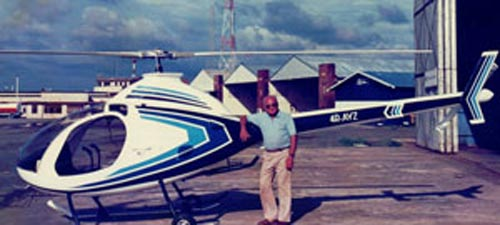
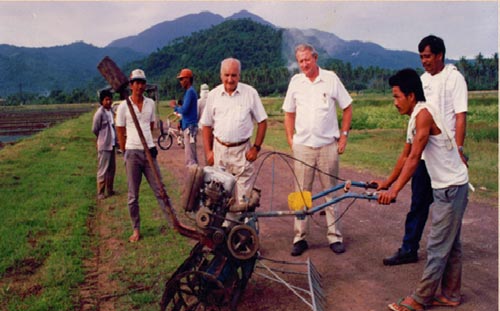
Above: Picture of Ahmed Muntasir Sami at AvioTecnica.EU head quarters along with Teddi Rossi
Attached is the supplied portrait of Sami, aircraft designs by sami and his ability to broker ultralight helicopter deals as he has already brokered a helicopter supply to U:S:A: from turkey
This adds an important dimension to Ahmed Muntasir Sami's story: he is not only exploring helicopter designs but also working as a deal broker in the ultralight helicopter market. The reported helicopter supply deal between Turkey and the United States gives the documentary a concrete business milestone alongside his research ambitions.
I would develop the film as a cinematic biographical documentary, combining Sami's actual portrait, his aircraft designs, his motivation for affordable aviation, and his international business activity.
🎬 Updated documentary: Ahmed Muntasir Sami — From Personal Loss to Affordable Aviation
AHMED MUNTASIR SAMI
From Personal Loss to Affordable Aviation
A biographical documentary
OPENING — A PERSONAL MOTIVATION
Bangladesh. A country of extraordinary energy, ambition, and resilience.
Yet, every day, its roads tell another story: accidents, families torn apart, hours lost in traffic, and the toll of congestion on people's health and well-being.
For Ahmed Muntasir Sami, these challenges were not distant statistics.
He witnessed the loss of his father, the parents of friends, and relatives in road accidents. He also experienced the consequences of prolonged traffic congestion.
These experiences helped inspire a different way of thinking about transportation.
Could engineering open new possibilities? Could personal aviation become more accessible?
For Sami, those questions became the beginning of a journey.
CHAPTER TWO — DISCOVERING THE WORLD OF ULTRALIGHT HELICOPTERS
His attention turned to ultralight helicopters.
Across Europe, the United States, and China, aircraft enthusiasts, engineers, and independent builders have explored ways to develop and construct lightweight helicopters using technical plans, practical skills, and innovative approaches to manufacturing.
Sami saw an opportunity to learn from this world.
His interest centered on a compelling proposition: investigate how engineering knowledge, accessible manufacturing, and international collaboration might reduce the barriers to helicopter development.
It was a vision that demanded more than enthusiasm. It required technical understanding, business knowledge, and a willingness to tackle difficult problems.
CHAPTER THREE — EDUCATION AND ENGINEERING AMBITION
Sami invested in education at ESTACA, the École supérieure des techniques aéronautiques et de construction automobile, and CentraleSupélec at Université Paris-Saclay.
His educational and professional interests span aeronautical operations and maintenance, alongside purchasing management in technology and industry.
These disciplines offer complementary perspectives on aircraft development.
Understanding aviation operations and maintenance helps illuminate the demands of aircraft reliability and safety. Knowledge of industrial purchasing can help identify suppliers, assess components, manage costs, and explore manufacturing opportunities.
For an independent researcher interested in affordable aviation, these are important areas of investigation.
CHAPTER FOUR — DESIGNING POSSIBILITIES WITH ARTIFICIAL INTELLIGENCE
Sami has explored helicopter designs using artificial intelligence.
AI-assisted design can help visualize aircraft concepts, explore configurations, and communicate engineering ideas.
But a digital model is only the starting point.
Turning a helicopter concept into a practical aircraft requires detailed engineering, structural analysis, rotor-system development, component testing, flight testing, and compliance with applicable aviation regulations.
Sami's research ambitions sit at the intersection of these challenges: exploring designs while investigating ways to make development and manufacturing more affordable.
CHAPTER FIVE — CONNECTING COUNTRIES THROUGH AVIATION BUSINESS
Sami's story also extends beyond the drawing board.
According to the account provided for this documentary, he has brokered a helicopter supply deal involving Turkey and the United States.
This reported transaction represents a business dimension of his involvement in ultralight aviation: connecting parties across international markets and helping bring helicopter supply opportunities together.
Aircraft development depends on more than engineering. It also depends on commercial relationships, suppliers, purchasing decisions, logistics, and the ability to navigate international business requirements.
For someone pursuing affordable aviation, these connections can be valuable.
The reported deal offers a potential milestone in Sami's commercial journey, alongside his longer-term interest in researching and developing more affordable helicopters.
CHAPTER SIX — THE VISION OF AFFORDABLE FLIGHT
Sami's broader ambition is to investigate whether international-standard engineering skills, manufacturing expertise, and the cost advantages available in lower-cost economies can contribute to more affordable helicopter development.
The vision combines several strands: AI-assisted aircraft concepts, aeronautical knowledge, international business relationships, and an interest in practical manufacturing.
The challenge is substantial.
Affordability must be balanced with airworthiness, reliability, maintenance, operating expenses, and passenger safety. Helicopters also face practical limitations involving weather, noise, infrastructure, and operating costs.
Affordable aviation cannot be achieved through design alone. It requires an entire ecosystem of engineering, manufacturing, regulation, training, and support.
Nevertheless, the ambition to investigate these possibilities provides a clear direction for Sami's continuing work.
ENDING — A JOURNEY STILL UNFOLDING
Ahmed Muntasir Sami's journey begins with a personal experience of loss and the daily difficulties of transportation in Bangladesh.
It develops through an interest in ultralight helicopters, investment in education, experimentation with AI-assisted designs, and involvement in international helicopter business.
His larger ambition is to explore a future in which more affordable aircraft might become attainable without compromising the safety and engineering standards aviation demands.
The journey is not simply about building a helicopter.
It is about asking whether technology, knowledge, and international collaboration can open new possibilities for personal aviation.
The dream is ambitious. The engineering challenges are real. The work continues.
Ahmed Muntasir Sami. Exploring the possibilities of affordable ultralight helicopters.
From a personal motivation to an international aviation ambition.
🎥 Recommended final video
I recommend a 3–4 minute cinematic documentary featuring:Opening: Sami's real portrait, followed by evocative scenes of traffic in Bangladesh.
Personal motivation: A respectful treatment of the losses that inspired his interest in alternative transportation.
Aircraft design: His actual helicopter concepts, with AI-assisted design visuals where appropriate.
Education: References to ESTACA and CentraleSupélec, with verified educational details.
International business: A visual transition from Turkey to the United States, illustrating the reported helicopter supply transaction.
Closing: The maroon helicopter flying over the Sundarbans, representing his ambition to explore affordable aviation.
The narration can be in English, with Bangla subtitles, cinematic music, and a professional male voice.
One important detail for the business chapter: Do you have a photograph, contract excerpt, or other material documenting the helicopter supply deal between Turkey and the United States? If you share it, I can portray Sami's role more specifically and accurately, rather than relying solely on the description provided.
⋮⋮⋮⋮⋮⋮⋮⋮