Showing posts with label Mexico. Show all posts

Tuesday, May 10, 2022

Friday, June 22, 2018

Chronicles of thoughts and acts from 08:18 to 16:29 GMT+3

0818 GMT+3

Learn coding on Grasshopper

0836 GMT+3

Listened to Sura Muzzammel after humming it as it was playing in my mind


1022 GMT+3

Had used Lemon instead of soap for shower. It nourished the skin with good oil as well

Cleaning a nearby pukur helped in the gaining of increased situational awareness which will be further

Pick Shajna pata which was used for savouring Lunch with rice, small onion, salt, zira powder and roshun mix

Watched local television set repairmen painstakingly looking at an image of circuit board in his mobile and try to fix a television. Wish to learn from him how to fix electronics and then combine further learning experience from mobile fixing guru bhai based nearby in Genda to become a genius mecanitricien  

Learned from Milk deliverer about kochuripana types and how it's roots sustains fish life. He advised to remove the kochuripana to allow light to pass space to breathe for fish

Salli and count poor and mosques money to see if beggars could be put in payroll to sell products


1311 GMT+3

Appreciating Brazilian women Taliria doing justice for the deprived Black local favela dewellers


It seems police are coordinating with government officials linked to the rich to remove any possible dissident by any means possible like planting drugs in kids bags. Ins ala the kids will get justice and the unjust will be dealt with fairly accordingly.

Wowed by kids trekking tough mountains, valleys and routes to go to school


Best part of this video is about a child falling off the cliff and being saved by vine plantation. Currently the farmers aren't able to ship their products to market efficiently enough to develop route network for travelling to school, work and market. How about  bringing the school to them through more online and community based education, working from home whenever possible, develop a bicycle and zipline transport network and P2P distribution of farm produce through sharing economy based app and drones to assure fresh produce reach the consumers in good and healthy conditions.

Realized that we the human race are a very small part of the known universe


1357 GMT+3

Adhan Asr

1437 GMT+3

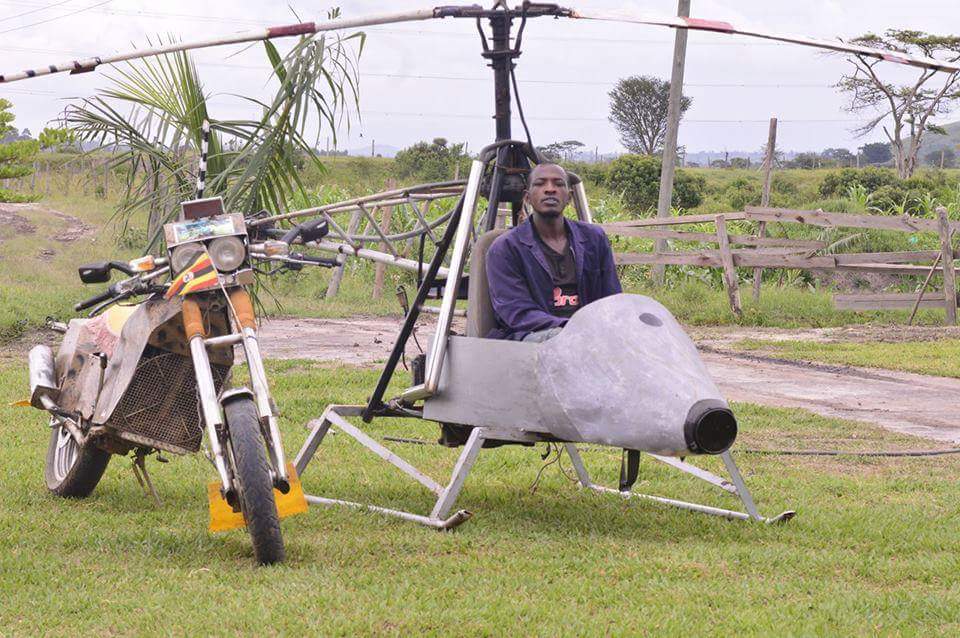
Working on helping through technical knowledge access and networking Joseph Nkaheza who is attempting to develop Uganda’s first locally made helicopter  that uses petrol. He is said to have made a 12-feet motorbike called 'Rubarusimo'  fueled by steam 


1450 GMT+3

Nice to see a Muslim origin brother score for Denmark


1453 GMT+3

Nice to see Tunis holding the English better than KSA did with Russia. England did well at the end


Thought of classmate Malvika Khimji who was hospitable to me the moment I entered class P3X at Muscat Private School around 2004. She welcomed me to sit next to her group of friends possibly due to my Indian subcontinent origin but I preferred sitting next to the brightest student to learn and be competitive. So I think I sat next to an Iraqi origin but British passport holder who seemed bright.

Something wrong happened and I got myself into an arranged fight with a Shia Pakistani classmate over an issue I still can't recall. Must be related to pride and he making fun of Bangladesh. I found my self get closer to another Pakistani relatively bright but quite canny yet deceptive student by the name of Jalaluddin Nadeem from possibly Karachi. He had high level of hypocrisy and lacked any loyalty towards many fellow classmates and found himself doing trivial tasks for well off and pretty ladies like tying shoes for Hiba and holding shopping bags full of gifts for Malvika Khimji- who I realised later that she was a good person in heart and soul despite having close friendships with ladies who weren't as good as her which tainted her image in my mind for quite sometime and made me reluctant to engage in any productive discussions with her. She let me borrow money when I needed and I returned the exact amount at soonest possible opportunity, possibly the next day. This experience led me to see a better side of her along with the fact that she always wore clothes which were respectful of the cultures surrounding her.   

1614 GMT+3

Nice bicycle kick by Germany but to no avail. Mexico nailed it


1624 GMT+3

Food for thought: Did the rich lady wearing jacket which says on the back "I really don't care" really cares about the plight of the children and parents separated by beefed up security and the wars caused by their governments interventions worldwide?

Wednesday, June 20, 2018

The gap between the entrenched participants and new challengers in ever increasing

Look at the new mobile phone Apps and Web services , Most are underpinned by advertising in an increasing crowded marketplace for traditional goods and services and are not highly valued products in their own right. You state that there is no problem with automation currently creating unemployment in Germany but this does not mean it isn’t elsewhere or wont in the future.

Germany enjoys a massive trade and current account surplus with the rest if the world . This until now has allowed it to not only create additional jobs directly related to the surplus but also many more internal service sector jobs that are supported by it.

In our technologically driven marketplace the incumbents have a vast advantage due to knowledge and expertise that take decades to foster and accumulate plus brand and market prestige plus already possessing large economies of scale which also allows them large long term research budgets to keep ahead. Given the unit cost of production/distribution is getting less and less compared to the initial development cost the advantages of scale are only getting bigger with the digital world.

The gap between the entrenched participants and new challengers in ever increasing. Germany is in the fortunate position of having many long standing and often large businesses in many key market segments which explains why it is prospering compared to most other countries.

China on the other hand is succeeding by massive long term state intervention to close the technological gap with the west

The issue we need to face with increasing automation is how to structure our society to reap the benefits in a fair and equitable manner, I do not believe the let the market decide approach will solve this.

Interested in you take on kleptocracy. I have the corrupt parasitic finance sector, the senior management of large listed corporations paying themselves obscene salaries, owners of large private businesses and privileged and regulated professional groups bankrolling and colluding with politicians at the public’s expense

I had a brain tumor. During the period when the brain was growing back into the hole where the tumor was cut out. The stem cells at the base of my brain were alive.

Things went wrong. The use of magnetic field therapy was in the beginning stages at that time, but it worked. Now this therapy and other much more advanced techniques are available.

The prices are still very high, but soldiers with Post Traumatic Stress can have the memories of the event erased and replaced with fake memories, brain tumour patients, can have false “Tracks” erased, etc.The next step is being able to magnetically write an entire University level education into the brain without ever attending a class.

When this is combined with designer babies- Now legal in England- there is a great danger of “The Alpha Society” occurring, but “the Genie is already out of the bottle”

I hope you do not get nightmares from what I just wrote, but the signs are that the rate of technological advance will increase, and even more AI science fiction is going to become science fact. This is assuming that John McCain and the other neocons in America do not start World War Three. That would be an much worse nightmare and Germany would cease to exist.

The developed states developed institutions that foster prosperity and peace.

Workers in rich countries earn more than those in poor countries partly because they are better educated but mostly because they live in societies that have, over many years, developed institutions that foster prosperity and peace.

Workers become far more productive when they move from a poor country to a rich one. Suddenly, they can join a labour market with ample capital, efficient firms and a predictable legal system. Those who used to scrape a living from the soil with a wooden hoe start driving tractors. Those who once made mud bricks by hand start working with cranes and mechanical diggers.

Those who cut hair find richer clients who tip better.“Labour is the world’s most valuable commodity—yet thanks to strict immigration regulation, most of it goes to waste,” argue Bryan Caplan and Vipul Naik in “A radical case for open borders”. Mexican labourers who migrate to the United States can expect to earn 150% more. Unskilled Nigerians make 1,000% more.“Making Nigerians stay in Nigeria is as economically senseless as making farmers plant in Antarctica,” argue Mr Caplan and Mr Naik. And the non-economic benefits are hardly trivial, either.

A Nigerian in the United States cannot be enslaved by the Islamists of Boko Haram.The potential gains from open borders dwarf those of, say, completely free trade, let alone foreign aid. Yet the idea is everywhere treated as a fantasy. In most countries fewer than 10% of people favour it. In the era of Brexit and Donald Trump, it is a political non-starter. Nonetheless, it is worth asking what might happen if borders were, indeed, open.To clarify, “open borders” means that people are free to move to find work. It does not mean “no borders” or “the abolition of the nation-state”.

On the contrary, the reason why migration is so attractive is that some countries are well-run and others, abysmally so.Workers in rich countries earn more than those in poor countries partly because they are better educated but mostly because they live in societies that have, over many years, developed institutions that foster prosperity and peace. It is very hard to transfer Canadian institutions to Cambodia, but quite straightforward for a Cambodian family to fly to Canada.

The quickest way to eliminate absolute poverty would be to allow people to leave the places where it persists. Their poverty would thus become more visible to citizens of the rich world—who would see many more Liberians and Bangladeshis waiting tables and stacking shelves—but much less severe.If borders were open, how many people would up sticks? Gallup, a pollster, estimated in 2013 that 630m people—about 13% of the world’s population—would migrate permanently if they could, and even more would move temporarily.

Some 138m would settle in the United States, 42m in Britain and 29m in Saudi Arabia. Gallup’s numbers could be an overestimate. People do not always do what they say they will. Leaving one’s homeland requires courage and resilience. Migrants must wave goodbye to familiar people, familiar customs and grandma’s cooking. Many people would rather not make that sacrifice, even for the prospect of large material rewards. Wages are twice as high in Germany as in Greece, and under European Union rules Greeks are free to move to Germany, but only 150,000 have done so since the beginning of the economic crisis in 2010, out of a population of 11m. The weather is awful in Frankfurt, and hardly anyone speaks Greek. 

Even very large disparities combined with open borders do not necessarily lead to a mass exodus. Since 1986 the citizens of Micronesia have been allowed to live and work without a visa in the United States, where income per person is roughly 20 times higher. Yet two-thirds remain in Micronesia.Despite these caveats, it is a fair bet that open borders would lead to very large flows of people. The gap between rich and poor countries globally is much wider than the gap between the richest and less-rich countries within Europe, and most poor countries are not Pacific-island paradises. Many are violent as well as poor, or have oppressive governments.Also, migration is, in the jargon, “path-dependent”.

It starts with a trickle: the first person to move from country A to country B typically arrives in a place where no one speaks his language or knows the right way to cook noodles. But the second migrant—who may be his brother or cousin—has someone to show him around. As word spreads on the diaspora grapevine that country B is a good place to live, more people set off from country A. When the 1,000th migrant arrives, he finds a whole neighborhood of his compatriots.So the Gallup numbers could just as well be too low. 

Today there are 1.4bn people in rich countries and 6bn in not-so-rich ones. It is hardly far-fetched to imagine that, over a few decades, a billion or more of those people might emigrate if there were no legal obstacle to doing so. Clearly, this would transform rich countries in unpredictable ways.Voters in destination states typically do not mind a bit of immigration, but fret that truly open borders would lead to them being “swamped” by foreigners. This, they fear, would make life worse, and perhaps threaten the political system that made their country worth moving to in the first place. Mass migration, they worry, would bring more crime and terrorism, lower wages for locals, an impossible strain on welfare states, horrific overcrowding and traumatic cultural disruption.

Open questions. If lots of people migrated from war-torn Syria, gangster-plagued Guatemala or chaotic Congo, would they bring mayhem with them? It is an understandable fear (and one that anti-immigrant politicians play on), but there is little besides conjecture and anecdotal evidence to support it.

Granted, some immigrants commit crimes, or even headline-grabbing acts of terrorism. But in America the foreign-born are only a fifth as likely to be incarcerated as the native-born. In some European countries, such as Sweden, migrants are more likely to get into trouble than locals, but this is mostly because they are more likely to be young and male. A study of migration flows among 145 countries between 1970 and 2000 by researchers at the University of Warwick found that migration was more likely to reduce terrorism than increase it, largely because migration fosters economic growth.

Would large-scale immigration make locals worse off economically? So far, it has not. Immigrants are more likely than the native-born to bring new ideas and start their own businesses, many of which hire locals. Overall, migrants are less likely than the native-born to be a drain on public finances, unless local laws make it impossible for them to work, as is the case for asylum-seekers in Britain. 

A large influx of foreign workers may slightly depress the wages of locals with similar skills. But most immigrants have different skills. Foreign doctors and engineers ease skills shortages. Unskilled migrants care for babies or the elderly, thus freeing the native-born to do more lucrative work.Would open borders cause overcrowding? Perhaps, in popular cities like London. But most Western cities could build much higher than they do, creating more space. And mass migration would make the world as a whole less crowded, since fertility among migrants quickly plunges until it is much closer to the norm of their host country than their country of origin.Would mass immigration change the culture and politics of rich countries? Undoubtedly.

Look at the way America has changed, mostly for the better, as its population soared from 5m mainly white folks in 1800 to 320m many-hued ones today. Still, that does not prove that future waves of immigration will be benign. Newcomers from illiberal lands might bring unwelcome customs, such as political corruption or intolerance for gay people. If enough of them came, they might vote for an Islamist government, or one that raises taxes on the native-born to pamper the newcomers. Eyes on the prize.

There are certainly risks if borders are opened suddenly and without the right policies to help absorb the inflow. But nearly all these risks could be mitigated, and many of the most common objections overcome, with a bit of creative thinking.If the worry is that immigrants will outvote the locals and impose an uncongenial government on them, one solution would be not to let immigrants vote—for five years, ten years or even a lifetime.

This may seem harsh, but it is far kinder than not letting them in. If the worry is that future migrants might not pay their way, why not charge them more for visas, or make them pay extra taxes, or restrict their access to welfare benefits? Such levies could also be used to regulate the flow of migrants, thus avoiding big, sudden surges.This sounds horribly discriminatory, and it is. But it is better for the migrants than the status quo, in which they are excluded from rich-world labour markets unless they pay tens of thousands of dollars to people-smugglers—and even then they must work in the shadows and are subject to sudden deportation.

Today, millions of migrants work in the Gulf, where they have no political rights at all. Despite this, they keep coming. No one is forcing them to.“Open borders would make foreigners trillions of dollars richer,” observes Mr Caplan. A thoughtful voter, even if he does not care about the welfare of foreigners, “should not say...‘So what?’ Instead, he should say, ‘Trillions of dollars of wealth are on the table. How can my countrymen get a hefty piece of the action?’ Modern governments routinely use taxes and transfers to redistribute from young to old and rich to poor. Why not use the same policy tools to redistribute from foreign to native?” If a world of free movement would be $78trn richer, should not liberals be prepared to make big political compromises to bring it about?

Monday, September 12, 2016

British & Mexican homes with helicopters

Tim Virdee Lake Huf Haus Surrey Sussex


Lake house


Lake house Plaistow, Billingshurst UK
Sanne and Tom Virdee had their Huf Haus in the country completed in four months


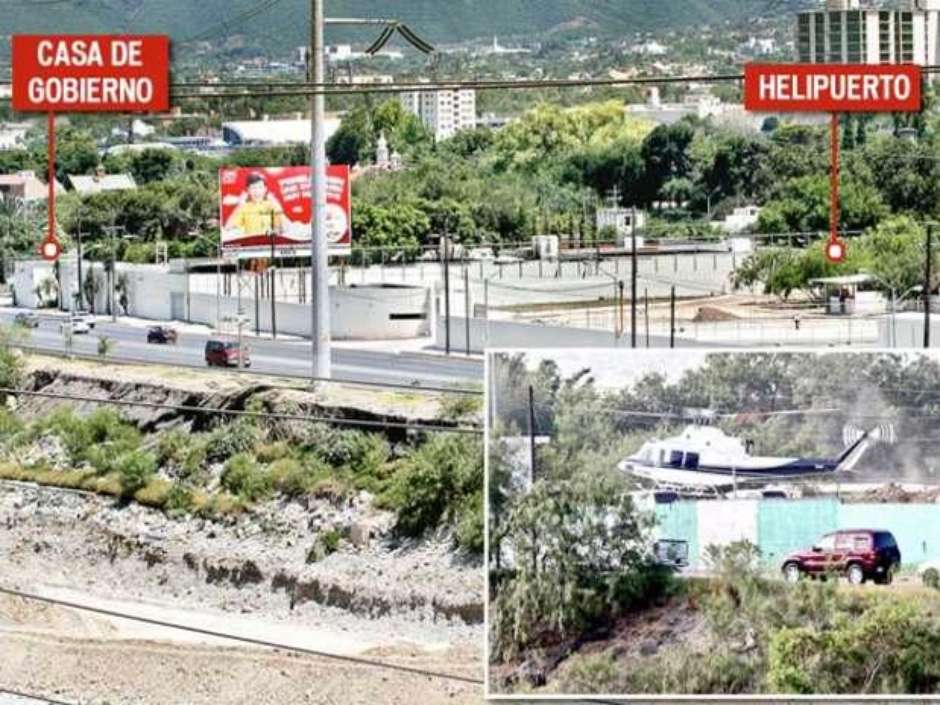
Casa de Gobierno, San Pedro Nuevo León, 200 avenida Morones Prieto
Afficher l'image d'origine


Afficher l'image d'origine

Wednesday, June 22, 2016

Comparing Americas estates

A look at the home's tennis court, FAA hangar and helipad.


Mexican estate with ranch, equine facilities and heliport


Mansions with heliport from Brasilia


Monday, February 23, 2015

Massive Mansions in Developing nations


Mansion with heliport, Argentina


Mexican Billionaire Slim Helu of Lebanese Origin Mansion


Gujar Khan Mansion The private home of Prime Minister Raja Pervaiz Ashraf

Wealthy man's home in Bangladesh


Manik Miah editor of Ittifaq's residence, Bangladesh


Wednesday, June 4, 2014

Exclusive resorts and residences worldwide

Tamina Therme Spa, Switzerland

View Larger Map

Floating Taj Mahal

View Larger Map


Ningxia luxury Villas of VIPs

View Larger Map

Mexico city Twin Heliport

View Larger Map


View Larger Map

Golfcourse residences in Mexico

View Larger Map


View Larger Map

Skyscrapers with rooftop helipads at a business district, Mexico

View Larger Map


View Larger Map


Argentina farms
View Larger Map


View Larger Map

Monday, April 8, 2013

Glass pools are becoming essentials for resorts


Perth Australia

DuPont’s SentryGlass Plus, for the glass pool wall at Tower 4 Burswood Complex located in Burswood, Western Australia.


Hibiscus Port Dickson Floating residence, Malaysia


The Light Penang, Malaysia


Legray hotel, Lebanon Glass pool


View Larger Map


La Purificadora, Mexico

View Larger Map


W hotel Miami with glass swimming pool


Bali resort with glass pool


Grok helps the broke

Grok is helping raise my self up as a broker of attainable, accessible, inclusive and sustainable helicopters. Ahm...