Sunday, January 7, 2024

Small helicopters from the largest country

The offer "Blades and other parts for a homemade helicopter" in Rostov-on-Don, in the Rostov region, is located at. You can discuss the details of the ad and contact the seller Evgeniy and buy by calling +7 (905) 485-36-30, as well as using a personal message on the website

Aero Kazachok


beboo.ru/profile/12398593

Thursday, December 28, 2023

What does Sri Lankan Agriculturalist and Perfumer from India have in Common?

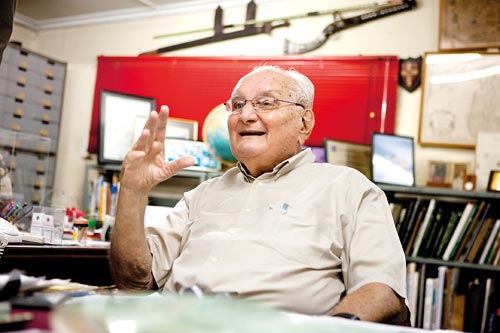
He touched lives as an engineer, inventor and agriculturalist

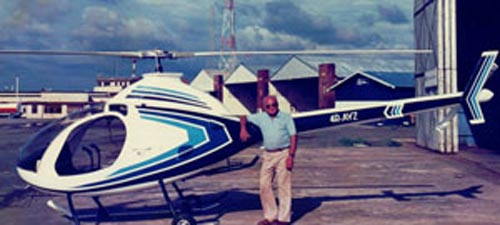
With one of his home-built helicopters

The Dr Ray Wijewardene Memorial Oration for 2023 will be on Friday, September 8 at the Institution of Engineers, Sri Lanka (IESL) auditorium at Wijerama Mawatha, Colombo 7 at 5.15 p.m.View(s): 361


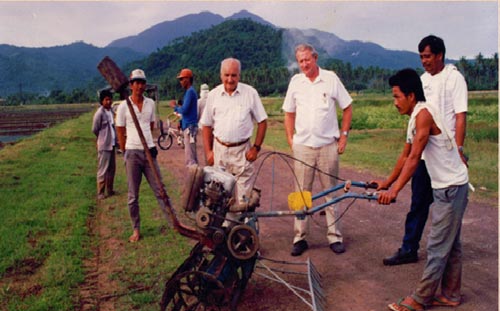
Ray Wijewardene pioneered the use of technology in farming

Lakmini Wijesundera, Founder & Executive Director BoardPACInc and IronOne Technologies will deliver this year’s oration on the topic ‘Globalizing Sri Lankan Technology: The BoardPAC Journey’. She is the first woman to be invited to deliver this annual oration.

The Dr. Ray Wijewardene Memorial Oration was established in 2011 by the Ray Wijewardene Charitable Trust (RWCT) in collaboration with the Institute of Engineers Sri Lanka (IESL). Every year the engineering community of Sri Lanka comes together to remember Dr Ray’s invaluable contribution to the world and to acknowledge the decades of innovations around the world. Each year individuals who contributed to the field of innovation take the opportunity to showcase their journey and share their knowledge with peers as well as the public.

The RWCT with the leadership of Dr. Ray’s three daughters Anoma, Roshi and Mandy have organised the annual orations and activities of the Trust over the years keeping his memory alive.

“As a visionary scientist, Dr. Ray Wijewardene touched many lives worldwide throughout his long career as an engineer, inventor, and agriculturalist. Having graduated from two of the greatest Universities in the world – University of Cambridge and Harvard University, he conducted experiments and innovations in many fields including agriculture, aeronautics, and renewable energy that continues to shape the world today,” Lakmini Wijesundera said, adding that “as Dr Ray was a dear uncle of mine, it brings deeply personal relevance and pride to be delivering this most special memorial oration.”


Dr Ray Wijewardene: Man with a vision

In aviation, Dr Ray’s design of the world’s first practical human-powered aircraft, the “Man-powered Aircraft” or MPA, demonstrated the feasibility of human-powered flight and inspired subsequent innovations in aviation technology.

His contributions to agricultural engineering were equally groundbreaking; he developed the world’s first two-wheel tractor, the “Jet Reapers,” revolutionising small-scale farming and significantly increasing agricultural productivity in developing countries from Asia, to Africa and Latin America. Moreover, Dr. Ray’s dedication to sustainable agriculture and conservation led to advancements in agro-forestry and soil conservation techniques, addressing critical global challenges related to food security and environmental sustainability.

Throughout his career, he strongly believed in giving back to the community and training young minds to pass on the legacy of innovation to others. One such initiative he contributed to was the ‘Science for Youth’ programme launched by Dr. Cyril Ponnamperuma in the 1980’s, which later became the “Computer Society of Sri Lanka (CSSL)”. He would often collaborate with renowned innovators like his longstanding friend, Sir Arthur C. Clarke, to discuss his vision for the world and Sri Lanka.

Dr Ray’s legacy reminds us that true innovation often thrives outside traditional institutions, and that the spirit of discovery and invention should be nurtured with a focus on solving real-world challenges. His journey encourages today’s engineers and innovators to boldly pursue their ideas, collaborate widely, and embrace failure as a stepping stone to success, a press release from the RWCT states.

Lakmini Wijesundera studied at CMS Ladies College in Colombo. Her higher education in Electronic Engineering and Computer Science at University College London and Imperial College London, University of London, UK, was a foundation and introduction to the possibilities of groundbreaking innovation in technology. Embarking on her entrepreneurial journey in the tech industry, she draws parallels between her passion and what must have compelled Dr Ray.

Her spirit of innovation gave rise to BoardPAC that is ranked as one of the best global Board Governance technology platforms by Capterra of Gartner Inc., the leading global technology advisory firm. BoardPAC bridges a longstanding gap that had persisted in boardrooms for decades. Lakmini envisioned an all-encompassing platform capable of digitizing and automating the entire board meeting and board governance process and further elevating the experience of Boards with relevant insights to important subjects such as Sustainability (ESG and Carbon Neutrality) with the use of cutting edge technologies of Artificial Intelligence and Machine Learning.

BoardPAC’s clientele includes Forbes, Fortune ranked and publicly listed top ranking companies and governmental bodies in over 40 countries – the USA, Malaysia, South Africa, Singapore, Middle East and India. This remarkable growth, against all odds, was aided by a vision and belief that a Sri Lankan built technology company could ascend to the same heights as its global counterparts.

This year’s oration will elaborate Lakmini’s journey with BoardPAC, as an inspiration to many others to embrace the possibility for Sri Lankan businesses boldly presenting their products to the world and taking the challenge to be among the top ranked offerings globally. Testament to the enduring legacy of inspiration that Dr Ray Wijewardene left behind.

 Helicopter is what a Perfumer from India have in Common. Here's Ajmal House Owner

Friday, December 22, 2023

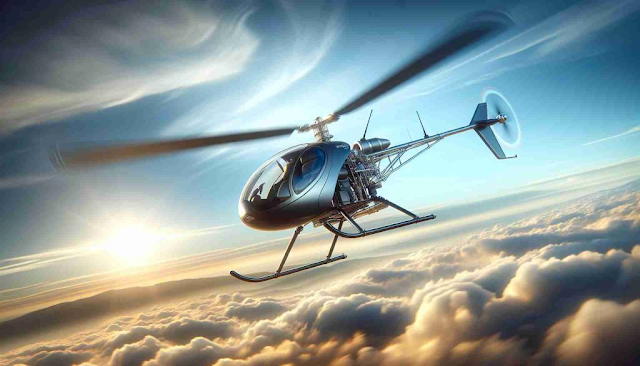
AI designed Ultra Light Helis


2 seat helicopter concept by AI

2 seat 3 bladed heli 

4 blade helicopter

Mass production of Ultralights


Virtual Virtue Video

www.virtuelvirtue.online

Video Exchange for trading public, private and on demand videos:

  • Companies, individuals and institutions will sponsor it for public good.
  • People would be able to invest, donate and gift to content creators directly in the site
  • Only verified users with Identification Documents will be able to receive and access finance
  • Host videos demanded by pool of viewers or a viewer willing to pay or invest in the video making
  • Live video of streaming web cam to see progress of renovation and building projects invested on
  • Terms and conditions video seen by people proven by tracking eye balls
  • Q&A with viewer & creator of video
  • Neutralizing effect by suggesting videos showing contrasting POV
  • List of top viewers and creators
  • Errands done & services values accrued and owed
  • Investment value on projects financed and their current status
  • On demand how to videos in details with lessons where viewers can participate
  • Threads of videos and chronicle of updates
  • Income distributed according to contribution in making video
    • encourage mid size film makers to participate
  • Money + points for responding to video comments by creators
  • Credit videos by source & get share of revenue when used in another video which gets viral
  • Chance to give secret Sadakah to people in need as seen in video without going through middle men
  • Video aggregator and arranger based on topic and interest. 
    • Compiles full video on a subject and/ or interest from all sites & languages
  • Featuring location and area covered 
  • Transparent showing costs of hosting, labor, time, efforts and impact on the environment
  • Shows profit making videos, neutral and loss making videos seeking sponsorship for public good
  • Notes time watched for each video and number of times watched
  • Podcasts, music, dialogue, phone conversation, voice recording, live radio participation
  • Goal, skill learning, desire and target based suggestion
    • Fill holes in skills like language, cooking and serves full plate
  • Fixed schedule set, no crossing time boundaries and trigger free with disease conscious. 
  • People are identified as featured in video for possible collaboration and reporting in case of crime
  • Theft videos and CCTV footage uploaded for identifying criminals and finding people for errands
  • Crowd fundraiser directly showing how much is needed, received and status of project
  • Employ someone to group videos and arrange them to suggest to you based on your demand
    • The employees gets ratings based on quality of suggestions

Greenery and pools

 la piscine olympique de Saint-Sauveur

Airbus H160 in KSA resort featuring pools


Thursday, December 21, 2023

Massive equestrian project in Arabia

AlMuatadil Equestrian Village
pic.twitter.com/LfLApqB52s&mdashلكية لمحافظة العلا (@RCU_SA) March

Questionable Helicopter Maker of Nigeria

We helped a fellow helicopter enthusiast back on 2nd August 2009 Mubarak Muhammad Abdullahi passport number A 00414 178 from No 531 Mahmood Tukur Road Bayero University, Kano P.O. Box 65, Bayero University Kano, Newsite, Nigeria.


With our sponsorship he came to Malaysia from London to our site and stayed freely in our hotel in exchange for promising to work on a helicopter project. Unfortunately he absconded after taking money from us, roamed around Malaysia with his friend who threatened us and extorted money from us.

If you can help us get £3,570 back from Mubarak Abdullahi then we will be relieved. 

His UK number was +447771129454

Mubarak Abdullahi is said to be from Bayero University, Kano. He did his BSc in Physics.

We asked him to come to us in Malaysia and build helicopters. We paid for the airline return tickets from London to Kuala Lumpur. We even paid for transport in London including the metro and bus.

It's not just money we lost but more importantly pain and dishonor which slowed down our operation and made us lose momentum.

I can't take legal actions because we prefer discrete diplomacy to solve this issue.

Introducing TED Fellow: Mubarak Muhammad Abdullahi

As part of my effort to promote science and technology in Nigeria, Africa and the whole world, I want to open an engineering and research company, where talent like me and others will have the opportunity to bring out their ideas and put them into practice by sharing them with the other talents in the company, to find the solution on how to improve it and makes it acceptable to the society or government. The talents will be between the age of 10 and 25 years. All the necessary tools, machines, and materials will be provided by the company under proper safety precautions. To start a company like this would not cost a lot of money, and the return would be a lot.

Nigeria’s magnificent young man and his flying machine

Mubarak Muhammad Abdullahi, a 24-year-old physics undergraduate in northern Nigeria, takes old cars and motorbikes to pieces in the back yard at home and builds his own helicopters from the parts. ''It took me eight months to build this one,'' he said, sweat pouring from his forehead.

Mubarak Muhammad Abdullahi, a 24-year-old physics undergraduate in northern Nigeria, takes old cars and motorbikes to pieces in the back yard at home and builds his own helicopters from the parts.

”It took me eight months to build this one,” he said, sweat pouring from his forehead as he filled the radiator of the banana yellow four-seater which he now parks in the grounds of his university.

The chopper, which has flown briefly on six occasions, is made from scrap aluminium that Abdullahi bought with the money he makes from computer and cellphone repairs, and a donation from his father, who teaches at Kano’s Bayero university.

It is powered by a second-hand 133 horsepower Honda Civic car engine and kitted out with seats from an old Toyota saloon car. Its other parts come from the carcass of a Boeing 747 which crashed near Kano some years ago.

For a four-seater it is a big aircraft, measuring twelve metres long, seven metres high by five wide. It has never attained an altitude of more than two metres.

The cockpit consists of a push-button ignition, an accelerator lever between the seats which controls vertical thrust, a joystick that provides balance and bearing.

A small screen on the dashboard connects to a camera underneath the helicopter for ground vision, a set of six buttons adjusts the screen’s brightness while a small transmitter is used for communication.

”You start it, allow it to run for a minute or two and you then shift the accelerator forward and the propeller on top begins to spin. The further you shift the accelerator the faster it goes and once you reach 300 rmp you press the joystick and it takes off,” Abdullahi explained from the cockpit.

He said he learned the rudiments of flying a helicopter from the internet and first got the idea of building one from the films he watches on television.

”I watched action movies a lot and I was fascinated by the way choppers fly. I decided it would be easier to build one than to build a car,” he said pacing the premises of the security division of the university which he uses as hanger for his helicopter.

He hoped — and still does hope — that the Nigerian government and his wealthy compatriots would turn to him and stop placing orders with Western manufacturers.

So far, however, government response to his chopper project has been underwhelming.

Although some government officials got very excited when they saw him conduct a demonstration flight in neighbouring Katsina state, Nigeria’s Civil Aviation Authority (NCAA) has so far shown no interest in his aircraft.

”No one from the NCAA has come to see what I’ve done. We don’t reward talent in this country,” he lamented.

Abdullahi does admit that his first helicopter lacks ”some basic facilities like devices for measuring atmospheric pressure, altitude, humidity and the like”.

In a country with Nigeria’s abysmal air safety record officials may be loath to gamble on one student’s home-made helicopter.

But Abdullahi, undeterred, has started work on a new flying machine, which, he says, ”will be a radical improvement on the first one in terms of sophistication and aesthetics”.

Currently just a spindly metal frame in the back yard, the helicopter will be a two-seater and Abdullahi calculates it will be able to fly at an altitude of 4,5m for three hours at a stretch.

It will be powered by a brand new motor — albeit Taiwan-manufactured and destined for the Jincheng motorbike so common on the streets of Kano. – Sapa-AFP

Grok helps the broke

Grok is helping raise my self up as a broker of attainable, accessible, inclusive and sustainable helicopters. Ahm...